The Interplay of Merchant Account Establishment and Handheld Terminal Validation in Worldwide Subscription Platforms
Written by Ulrich Perry · Oct 2, 2026
The Interplay of Merchant Account Establishment and Handheld Terminal Validation in Worldwide Subscription Platforms
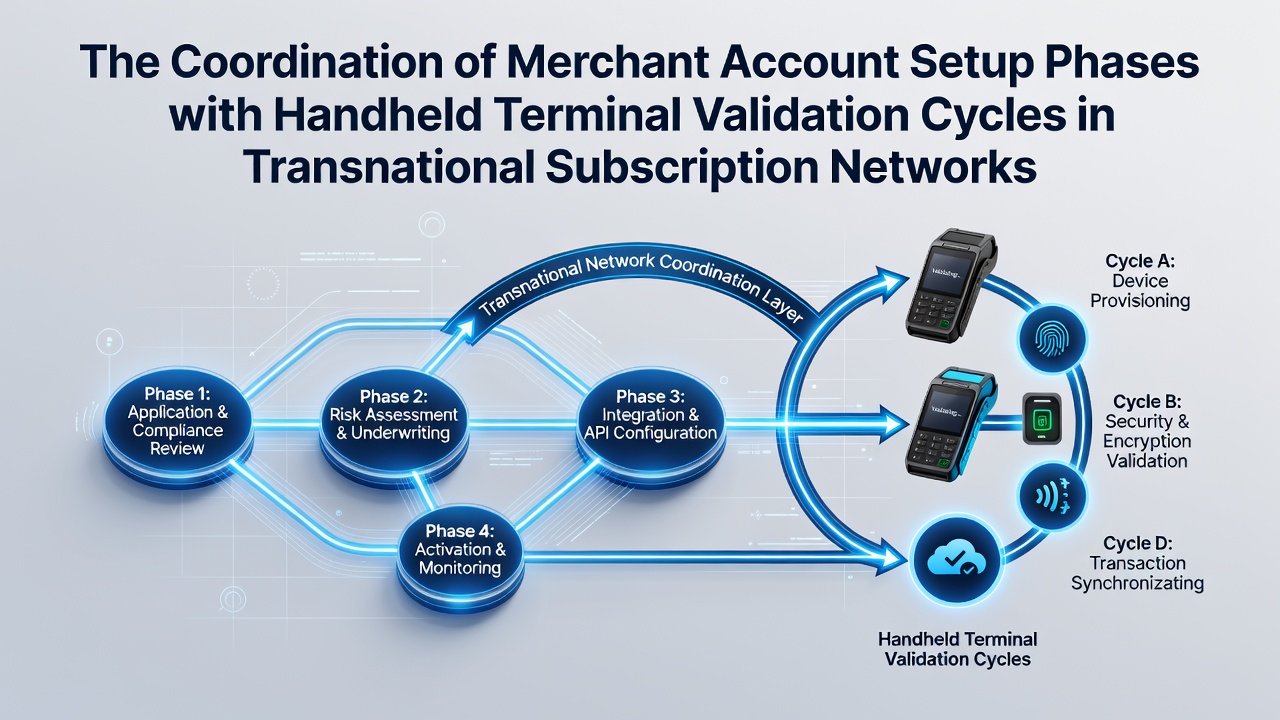
Merchant account setup in transnational subscription networks requires precise timing with handheld terminal validation cycles to support recurring billing across multiple jurisdictions, and data from the PCI Security Standards Council shows that synchronized processes reduce onboarding delays by aligning documentation reviews with device certification checks. Account establishment typically begins with application submission, risk assessment, and underwriting reviews while terminal validation runs parallel through firmware checks, encryption key loading, and EMV compliance testing.
Phases of Merchant Account Establishment
Initial phases involve identity verification, business documentation collection, and financial history analysis that feed directly into gateway provisioning steps, yet observers note these sequences often overlap with terminal shipment schedules to prevent idle hardware during the subscription activation window. Subsequent approval stages incorporate PCI DSS self-assessment questionnaires and site inspections when required, which connect to terminal validation through shared compliance logs that track both account status and device certification dates simultaneously.
Handheld Terminal Validation Cycles
Validation cycles for handheld devices encompass hardware integrity tests, software version verification, and network connectivity trials that must complete before terminals enter live subscription environments, and researchers have found these steps integrate with account setup through centralized dashboards that flag mismatches in certification timelines. Device provisioning includes loading payment applications, configuring multi-currency support, and conducting end-to-end transaction simulations, while account teams monitor these activities to ensure terminal IDs link correctly to merchant profiles before recurring billing commences.
Coordination in Transnational Subscription Networks
Transnational networks demand coordination because regulatory requirements vary by region, so account setup teams track jurisdiction-specific rules while terminal validation adapts to local certification bodies, and reports from the Bank for International Settlements highlight how such alignment supports seamless cross-border authorizations. Subscription models add layers of complexity since recurring charges depend on stable terminal configurations that remain valid throughout renewal periods, prompting processors to schedule validation renewals in advance of account review cycles. October 2026 brings updated EMV contactless specifications that will require refreshed validation sequences for many handheld units operating in subscription services, forcing merchants to integrate these deadlines into their account maintenance calendars.

One study revealed that organizations maintaining joint tracking systems for account phases and terminal cycles experience fewer interruptions in payment flows, particularly when handling multi-currency subscriptions where authorization sequences must remain consistent. Those who've studied this know that mismatches between account approval dates and terminal certification expirations can trigger holds on new subscriber enrollments, leading processors to implement automated alerts that synchronize both timelines.
Key Integration Points and Data Flows
Integration points include shared databases that link merchant identifiers to terminal serial numbers, allowing real-time status checks during subscription onboarding, whereas separate systems often create bottlenecks that delay activation across borders. Data flows between underwriting platforms and device management portals carry compliance attestations alongside terminal test results, enabling teams to confirm that encryption standards meet requirements before live recurring transactions begin. Evidence suggests that mapping these dependencies early in the process helps operators anticipate certification renewals that coincide with account re-verification periods.
Challenges Across Multiple Regions
Regional differences in certification timelines create ongoing coordination demands, since some markets require annual terminal revalidation while others tie checks to account renewal dates, and experts have observed that subscription networks spanning these zones benefit from unified project management tools. Currency conversion modules within handheld devices also need validation against account-level settlement agreements, ensuring that recurring charges process without interruption when regulatory updates occur. Observers note that maintaining these alignments becomes especially critical during peak subscription periods when volume spikes test the robustness of coordinated systems.
Conclusion
Effective coordination between merchant account setup phases and handheld terminal validation cycles supports reliable operations in transnational subscription networks by connecting compliance checkpoints and device certifications through shared timelines, and ongoing regulatory shifts such as those scheduled for October 2026 will continue to shape these integration practices. Processors and merchants that track these sequences together position their platforms for consistent performance across jurisdictions.